Players should understand what a developer product does before they decide whether to buy it. Clear wording, visible prices, and an honest explanation turn monetization into an informed choice rather than a surprise. This approach supports game design, protects trust, and gives creators a practical standard for building products responsibly.
On Roblox, a developer product is a conditional creator tool, not guaranteed income. Its results depend on eligibility, the experience, audience response, and applicable platform and audience requirements. Treat that uncertainty as part of the design brief: offer value first, then measure whether the purchase fits the play experience.
Separate helpful options from forced payment
Start by separating helpful options from forced payment. A purchase can save time, add a creative choice, or provide a new activity without blocking the basic route. When players can continue learning and progressing without paying, the product feels optional. That distinction is important for younger audiences and family focused experiences.
Forced payment appears when a creator hides essential understanding behind urgency, confusion, or repeated interruption. Avoid prompts that imply a player must purchase to belong, recover progress, or reach an ending. Instead, explain what changes after purchase and leave room for players to decline without punishment, embarrassment, or nagging.
Define the product before building it
Define the product before building its interface, price, or promotional message. Write one sentence describing the player problem it addresses and one sentence describing its limits. This brief keeps the team aligned, prevents accidental overpromising, and makes later feedback more useful. It also connects monetization choices to the experience’s central purpose.
Describe the player value
Describe player value in concrete language. Say whether the product adds a tool, cosmetic expression, convenience, challenge, or social possibility, and show that benefit inside the normal context of play. Avoid inflated claims such as becoming unbeatable or receiving guaranteed success. Specific value helps players compare the offer with their goals.
Check how it affects progression
Check how the offer affects progression before release. Map the ordinary path from the opening activity to a milestone, then mark every point touched by the product. A game pass or developer product should not make ordinary play feel deliberately incomplete. Preserve achievable goals, readable effort, and satisfying progress for nonpayers.
Make the offer clear and age appropriate
Make the offer clear and age appropriate at every step. Use a short label, a readable description, and a price presentation that does not hide important conditions. Explain whether benefits are temporary, repeatable, cosmetic, or connected to play. Match the language and complexity to the audience, with extra care when children may participate.
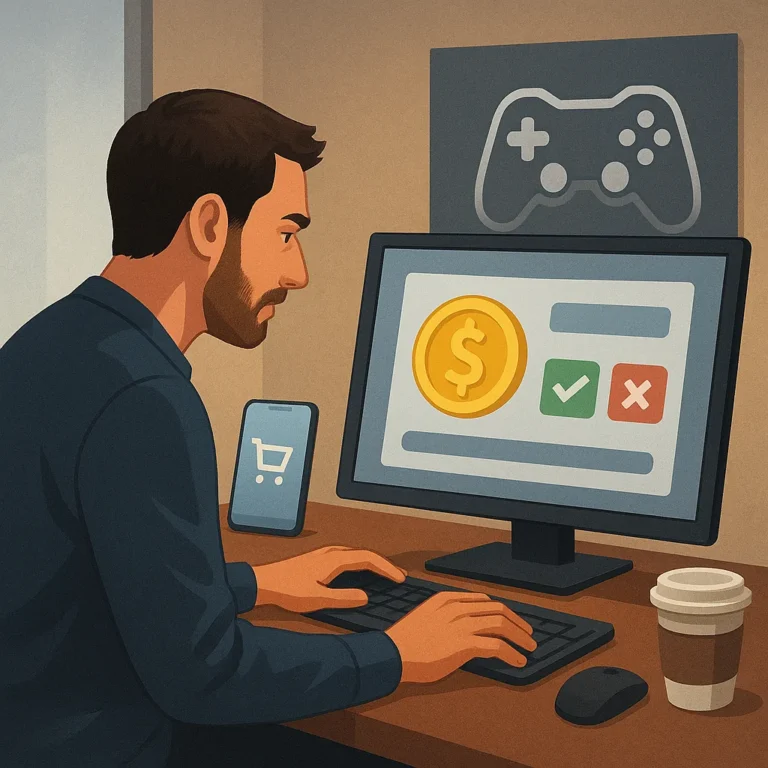
Show the purchase moment as an explanation, not a sales ambush. Let players review the cost, receive a plain account of the benefit, and cancel the decision simply by closing the prompt. Follow current platform rules, privacy expectations, and age appropriate practices. Honest presentation reduces confusion and gives families better confidence.
Test the purchase experience without pressure
Test the purchase experience without pressure before inviting real players. Ask testers to explain what they think the product does, where they expect the price, and what happens after confirmation. If answers differ from the intended meaning, revise the interface. Usability testing should reveal confusion, not teach testers to tolerate it.
Run the same checks across devices, connection conditions, and ordinary play sessions. Confirm that buttons work, benefits appear as described, and progress remains intact after leaving or returning. Watch for lag, accidental taps, unclear currency amounts, or repeated prompts. A reliable flow respects attention and prevents technical problems from becoming purchase pressure.
Keep the first version small enough to evaluate honestly. A focused product paired with a manageable game pass design can teach more than a crowded store filled with overlapping promises. Record what players understand, ignore, and question. Development guided by feedback works best when each change answers a specific observation rather than chasing every request.
Learn from reactions and revise responsibly
Learn from reactions without treating popularity as proof of quality. Compare comments, completion patterns, support questions, and observed friction with the product’s purpose. Look for repeated misunderstandings rather than isolated complaints, while still taking safety concerns seriously. Responsible analysis turns player feedback into evidence for clearer design decisions.
Revise the product, its explanation, or its placement when evidence shows confusion or unfair pressure. If a change affects progression, test that consequence again before publishing. Keep records of decisions and communicate meaningful adjustments plainly. This cycle supports development guided by feedback while protecting player choice, creator credibility, and trust over time.
Before launch, ask whether the product would still feel respectful if every player declined it. If yes, publish a clear initial version, watch reactions, and improve it gradually. Monetization should support a good experience, never replace one. That standard keeps optional purchases understandable, supports fair progression, and leaves room for sustainable creativity.